Rural Health, Childcare and Broadband
The Democratic Approach to Rural Housing
Housing is a farm issue as much as a town issue: hired hands, young families and retirees all need somewhere to live. This is the argument Democrats make for rural housing policy, the objections, and how to check the details.
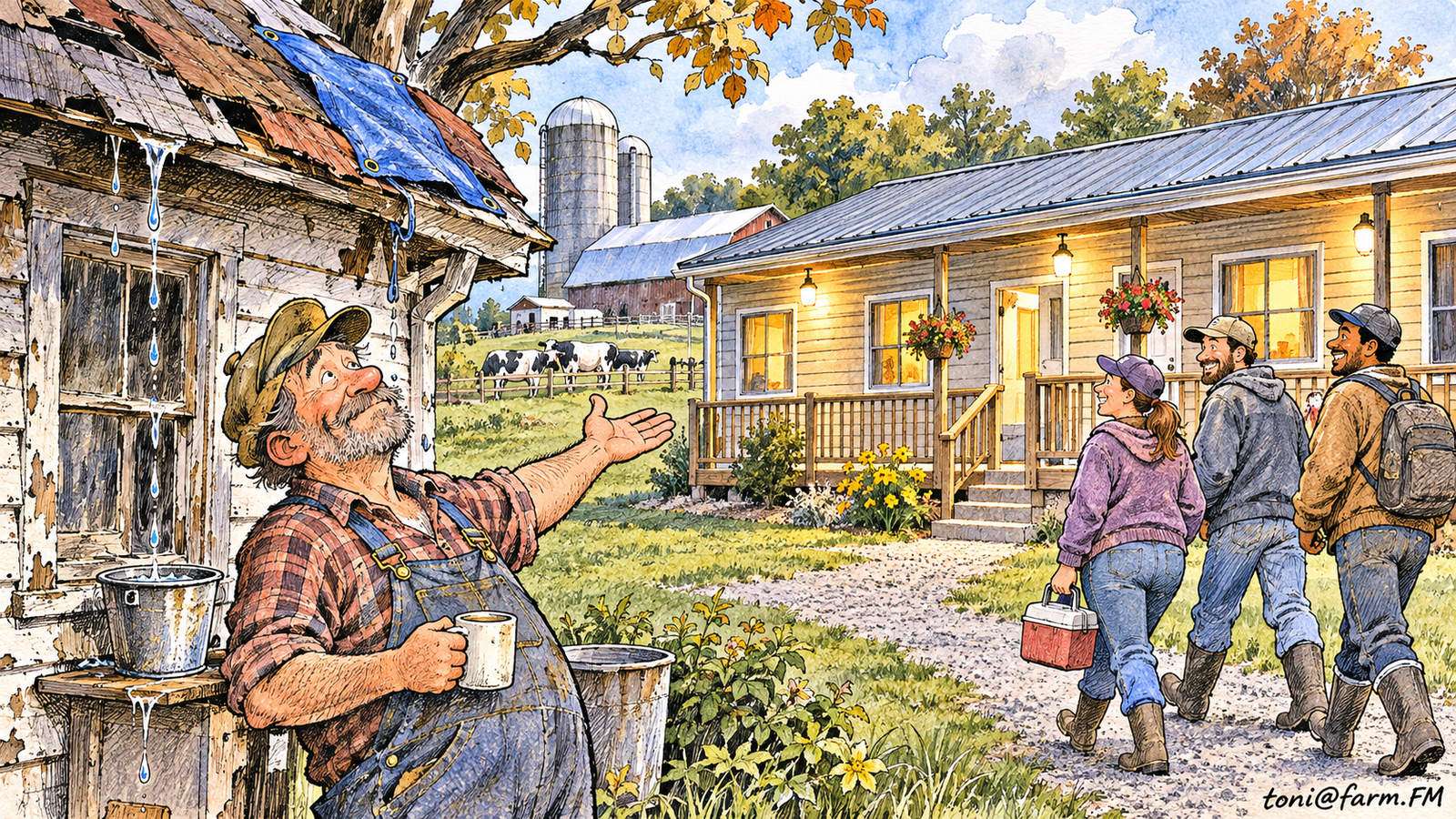
Why is rural housing a farm policy question?
A farm or ranch runs on people, and people need homes they can afford within driving distance of the work. Supporters of the Democratic approach argue that rural communities face a housing squeeze: aging stock, few new builds, contractors who are hard to find and rising material costs. That squeeze, they say, shows up as empty positions on dairies, feedlots and packing plants, and as young families who leave for the city.
We write from a progressive viewpoint here, so this piece lays out that case, attributes it to supporters, and gives critics their turn. For jobs and hiring context, this agricultural jobs guide shows how housing ties into who can take a farm job.
What do supporters propose?
In general terms, Democrats who work on this issue favor expanding federal tools that already exist, such as the rural housing loans and repair programs run through USDA Rural Development, and adding incentives for building and rehabbing homes in small towns. They also talk about support for farmworker housing, help for first-time buyers, and funding for local housing agencies that know their own markets.
Program names, income limits and dollar amounts change often, so we are not quoting any here. Check the official pages for current terms, and see the bill text on Congress.gov if you want to read what a proposal would do rather than what a headline says it would do.
- Rural home purchase and repair loans and grants
- Rental housing support in small towns
- Farmworker and seasonal housing
- Funding for local planning and housing capacity
How does this look in Pueblo and across Colorado?
Colorado is not one rural place. The Eastern Plains, the San Luis Valley, the Western Slope and the mountain resort areas each have different pressures, from wages that lag behind rent to scarce land zoned for homes. In and around Pueblo, a working family may be deciding between town and an acreage, and the answer depends on the water, the road and the commute as much as the price.
State resources matter too. The Colorado state government portal is a starting point for housing assistance, and CSU Extension publishes community and family resources for rural residents. The ruralfarm guide collects practical country-living basics that apply here.
What do critics say about the approach?
Critics respond that federal housing programs can be slow and paper-heavy, and that the biggest barriers to building in small towns are local: zoning, septic and water rules, labor shortages and the cost of lumber and land. Some argue that the market, not Washington, should drive construction, and that subsidies can raise prices or favor larger developers. Others worry about long-term cost to taxpayers.
There is also a fair question about whether more money alone produces more homes. Independent audits from the Government Accountability Office and cost estimates from the Congressional Budget Office are the places to look for evidence on what has and has not worked.
What facts are still disputed?
Reasonable people disagree on how large the rural shortage actually is, how much of it comes from regulation versus costs, and which tools deliver the most homes per dollar. Data on local vacancy, wages and rents is patchy in small counties, which makes every side's claims harder to test.
The Bureau of Labor Statistics publishes wage and price data, and the Census of Agriculture gives a picture of who is farming and who works on farms. Use them as a baseline, and be cautious of anyone who quotes a single number as proof of everything.
What can a farm family do right now?
Start local. Talk with your county housing authority, a community lender and your county extension agent about which programs actually have funds this year. Bring proof of income, a list of repairs or a building plan, and questions about timelines. Ask what the process costs and how long it usually takes.
If you want a lighter break from policy, farm.FM runs farm satire and farming stories that often poke at the small-town housing hunt, and a farm.FM piece on rural housing is worth a read. This site is an independent commentary page, not an agency or lender, and it cannot approve anything for you.
Sources and further reading
- USDA Rural Development: rural business and community programs
- Congress.gov: bills and legislative status
- Congressional Budget Office: cost estimates for federal programs
- GAO: government watchdog reports
- Bureau of Labor Statistics: labor and price data
- Census of Agriculture: USDA census of farms
Ask locally: Ask your county housing authority or a local community lender what rural housing help is open this year and what documents they want.