Why Democrats Believe the Farm Safety Net Needs a Complete Overhaul
The farm safety net is a patchwork of insurance, payments and disaster aid. Here is why Democrats say it needs a full rebuild, what the pieces do, and where the arguments get sharp.
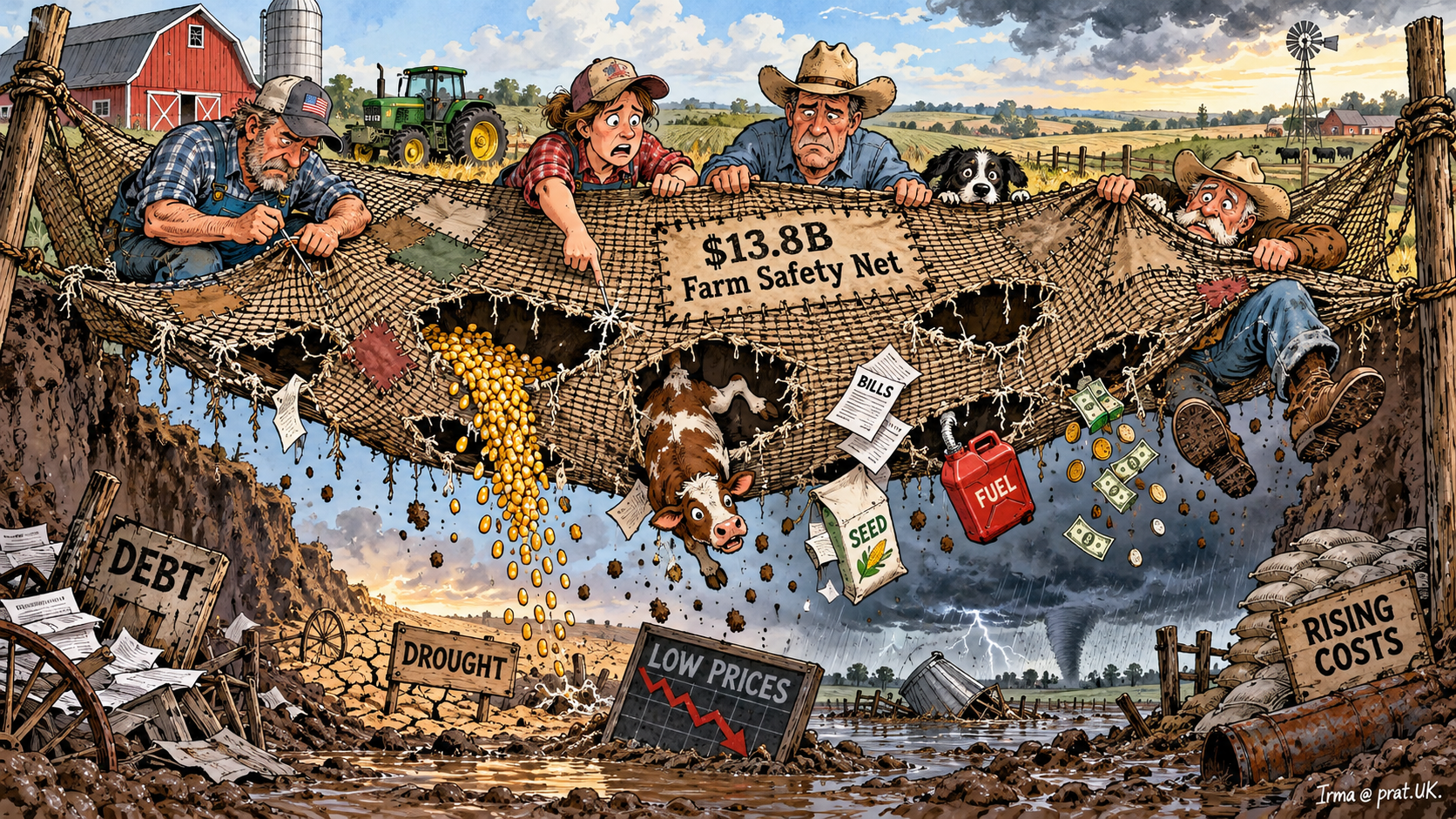
What counts as the farm safety net?
The safety net is a set of programs that cushion farm income. Crop insurance from the Risk Management Agency covers yield and revenue losses. ARC and PLC make payments when prices or revenue fall below benchmarks for covered crops. Disaster programs, dairy margin protection and loans fill other gaps.
The pieces were built at different times for different problems, which is part of the argument for overhaul. A farmer must decide between programs, meet deadlines and understand rules that vary by commodity. If you are unsure how yours work, ask your local FSA office.
Dairy producers have their own protection under Dairy Margin Coverage, and livestock producers have disaster programs that depend on drought and weather triggers. Each has separate enrollment steps.
What do Democrats say is wrong with it?
Supporters argue that the system favors the largest operations, leaves out many specialty and diversified farms, and responds too slowly to disasters. They also say commodity payments track production, so bigger farms collect more, and that insurance can be expensive or poorly suited to small, direct-market producers.
Some also point to weather and climate risk, arguing that the safety net was built for a more stable climate. Those are claims to check. The USDA Economic Research Service publishes data on who receives program payments, and GAO reports review program performance.
A hypothetical example: a diversified farm sells vegetables, eggs and a few beef animals. No single commodity program fits it well, so the farmer may fall through gaps even in a bad year. Supporters say that is exactly what an overhaul should fix.
What would an overhaul look like?
Ideas include whole-farm revenue protection that fits diversified operations, caps or tighter limits on payments to large farms, faster disaster aid, support for risk management tools for specialty crops and livestock, and changes that tie benefits to conservation. Details differ by bill.
For Colorado, a one-size program is a poor fit. A Western Slope orchard faces freeze risk, a Plains wheat grower faces drought and hail, and a rancher faces forage and price swings. Ask CSU Extension how these programs apply to your risks. The farm money guide shows how to build a risk plan around them.
Dairy and livestock families should also look at how disaster and margin programs interact with insurance, since signing up for one can affect another. Ask before the sign-up window closes, not after.
What do critics say?
Critics respond that the current safety net is a bipartisan compromise that has worked, that payment limits are hard to enforce and may drive farms to restructure on paper, and that radical changes bring uncertainty. Some argue that subsidies already distort markets and should shrink, not be redesigned.
Supporters answer that tweaks have not solved fairness problems, and that a safety net built for another era needs updating. The Congressional Budget Office scores farm bill costs, so use its numbers when claims about spending collide.
Others add that farm programs already take a large share of federal agriculture spending and that unpredictable rule changes make planning harder. That is a reasonable concern, and supporters should answer it with specifics.
How should a farmer think about risk now?
Do not wait for Congress. Review your crop insurance choices, learn what ARC or PLC would pay under different price outcomes, and keep production records. Talk to your insurance agent and lender about how coverage supports your loans.
A layered approach works best: insurance, a cash reserve, diversified sales and honest budgets. This small farm guide offers practical ideas. This is general information, and your agent, lender or tax preparer should tailor it.
A simple exercise: list your three biggest risks, price, weather and a major breakdown, and write what you would do if each hit next year. The gaps in that list tell you where to look for protection.
Where can you follow the debate?
Watch the House Agriculture Committee for markups and hearings. On farm.FM, farm economics coverage and farm news and satire follow farm bill fights, and a story on crop insurance and the safety net is relevant here.
The safety net is only useful if you understand it before the disaster. Learn it in a calm month.
Whatever the outcome, enrollment deadlines are real. Write them on the wall calendar and set a reminder a month ahead.
Sources and further reading
- USDA Risk Management Agency: crop insurance
- ARC and PLC: FSA commodity safety-net programs
- USDA Farm Service Agency: FSA farm programs and loans
- USDA Economic Research Service: farm economy data and analysis
- GAO: government watchdog reports
Ask locally: Ask your crop insurance agent and your county FSA office to walk you through coverage options before enrollment deadlines.